Transform Your Sponge: 5 Genius Ways Salt Changes How You Clean!
Transform Your Cleaning Routine: 5 Genius Ways to Use Salt with Your Sponge
- Introduction
- Benefits of Using Salt
- Innovative Cleaning Techniques with Salt
- Common Mistakes to Avoid
- Frequently Asked Questions
- Conclusion
Introduction
Picture this: you’re scrubbing your kitchen sink after a long day of cooking, but the grime just won’t budge. You reach for the usual cleaning products, but they seem to leave your surfaces dull and lifeless. What if there was a simple ingredient you already have at home that could elevate your cleaning game? Salt might just be the secret weapon in your cleaning arsenal that transforms not only your sponge but also your entire cleaning routine. Read on to discover how you can incorporate salt to make your cleaning more effective.
Benefits of Using Salt
Before diving into specific techniques, let’s explore why incorporating salt into your cleaning routine with your sponge is beneficial.
Natural Abrasive Properties
Salt’s granular texture acts as a natural abrasive, making it effective for scrubbing away tough stains without scratching surfaces. It’s an excellent choice for sensitive materials, such as wood or glass.
Deodorizing Qualities
One of salt’s lesser-known benefits is its ability to neutralize odors. When used with your sponge, it can help eliminate lingering smells in sponges and on surfaces.
Antibacterial Benefits
Salt is a natural disinfectant and can help kill bacteria. This is particularly useful in kitchen environments where hygiene is paramount.
Innovative Cleaning Techniques with Salt
Now that you understand the advantages, let’s look at five ways you can utilize salt alongside your sponge to enhance your cleaning effectiveness.
1. Sponge Soak for Odor Removal
- Fill a bowl with warm water.
- Add a couple of tablespoons of salt to the water.
- Soak your sponge in the solution for 30 minutes to deodorize it.
After soaking, rinse the sponge thoroughly to achieve a fresh, clean scent.
2. Scrubbing Stains on the Kitchen Counter
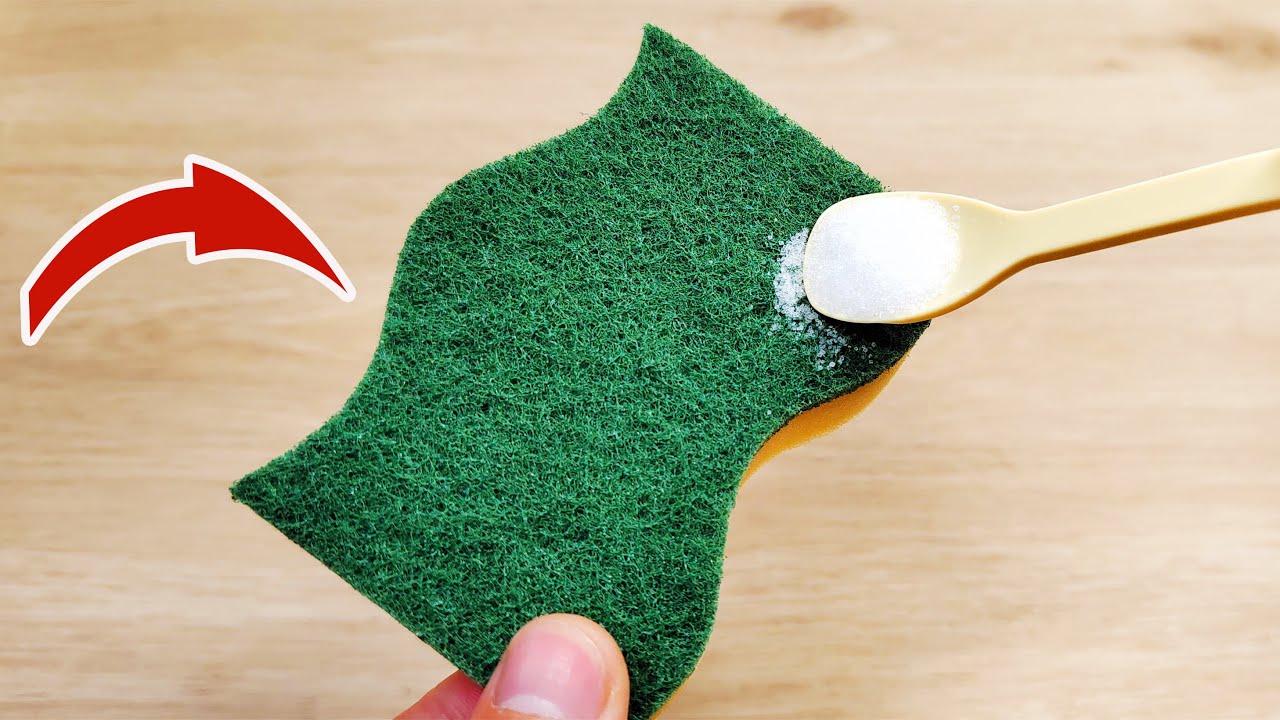
- Sprinkle salt directly onto the stained area.
- Gently rub the area with your damp sponge.
- Rinse the surface with clean water afterward.
This approach works especially well for tough stains like tomato sauce or wine.
3. Cleaning Grimy Pots and Pans
- Coat the bottom of your pans with salt.
- Use your damp sponge to scrub the surface.
- Rinse the pans with warm water and soap to finish cleaning.
Salt helps lift burnt-on food without scratching your cookware.
4. Freshening up the Fridge
- Mix a tablespoon of salt with a quart of water.
- Dip your sponge into the solution and wipe down the fridge interior.
- Rinse with plain water afterward.
This will help eliminate odors and bacteria in your fridge.
5. Polishing Wooden Furniture
- Combine salt with vegetable oil to create a paste.
- Apply the mixture with your sponge on wooden surfaces.
- Buff the furniture with a soft cloth for a shine.
This technique not only cleans but also nourishes the wood.
Common Mistakes to Avoid
While using salt in your cleaning routine can be highly effective, there are common pitfalls to steer clear of.
Using Too Much Salt
Overusing salt can lead to residue build-up on surfaces, which can attract dirt. It’s best to use salt sparingly.
Neglecting to Rinse Thoroughly
Failing to rinse off salt can leave surfaces looking dull or even lead to corrosion in metal items.
Not Testing on Inconspicuous Areas
Before using salt on any surface, especially wood or delicate materials, always test it on an inconspicuous area to avoid damage.
Frequently Asked Questions
Can I use any type of salt for cleaning?
Yes, table salt is commonly used, but sea salt can also be effective due to its coarser texture. Just avoid using flavored salts.
Is it safe to use salt on stainless steel?
While salt can be used on stainless steel, it’s crucial to rinse thoroughly afterward to prevent corrosion.
How often should I clean my sponge with salt?
Cleaning your sponge with salt every couple of weeks is generally effective for odor control and hygiene.
Conclusion
Incorporating salt into your cleaning routine can significantly enhance your sponge’s effectiveness, allowing you to tackle tough stains and eliminate odors with ease. Have you tried using salt for cleaning, and if so, what techniques have worked best for you?