23 Apple Tree Troubles and How to Solve Them Quickly
23 Apple Tree Troubles and How to Solve Them Quickly
There are few fall pleasures as delightful as biting into a homegrown apple. However, apple trees can bring a fair share of stress for home growers. Since these classic fruits grow from grafts, every tree within a variety is a clone of the others. This identical genetic makeup means that apple trees can’t evolve, giving pests and diseases a notable advantage. To protect your crop, you’ll need to put in a bit of extra effort. Fortunately, most issues can be managed with care and attention. Familiarize yourself with common apple tree problems and discover tips to prevent them.
Apple Pest Problems
Organic apple growers should be prepared to face various pests such as maggots, worms, beetles, and aphids. Here are some signs of insect damage and ways to combat them:
1. Bumpy Blemishes on the Fruit Surface
If you notice bumpy blemishes on the surface of the fruit that don’t penetrate the skin, your apples likely have capsid bugs. These small green insects overwinter in leaf litter and feed on leaves and developing fruit in the spring. While they can toughen the skin slightly, the flavor remains unaffected. If the infestation is minimal, consider cleaning up the leaf litter in the fall to reduce their population next year.
2. Maggoty Spots Inside the Apples
An almost ripe apple showing damage likely indicates codling moths. During their caterpillar stage, these insects bore holes into the apple core, filling the void with excrement and causing the fruit to rot. To protect your harvest, control the moth population by plucking any caterpillars from tree leaves and bagging your fruit as it forms. Keeping the orchard floor clean will help manage their populations.
3. Curled Leaves with Black Sticky Patches
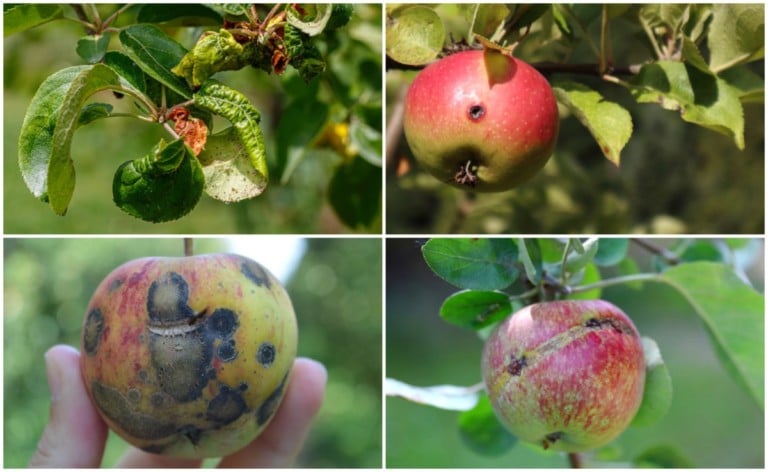
If the apple leaves are curled and distorted with black sticky patches, it’s a sign of aphid damage, often noticeable on the underside of leaves. While aphids typically don’t cause significant damage, they can be controlled with insecticidal soap.
4. White Fluffy Areas on Branches
This is likely a woolly aphid infestation, especially if the fluff is found on stems and branches. While woolly aphids aren’t usually harmful, they can encourage infections like canker. Spot treat affected areas with neem oil or insecticidal soap, or prune out the infected limbs.
5. Curled Leaves with Stunted Fruit
If your tree has curled leaves and produces small, underdeveloped fruit, it might be rosy apple aphids damaging the young fruits in spring. Monitor your trees closely and apply insecticidal soap when outbreaks occur; natural predators like ladybugs can also help control aphid populations.
6. Ribbon Scars on Ripened Fruit
A ribbon scar across the skin typically indicates the presence of apple sawfly. These insects lay their eggs in developing fruit, and larvae burrow through the skin as they grow. Destroy infected windfalls to prevent larvae from entering the soil and breeding the following year.
7. Misshapen Apples with Lumpy Indents
If your apples are misshapen with lumpy indents and insect holes, the culprit could be the plum curculio. This small weevil causes damage by feeding on buds and early fruit. Although it rarely destroys the fruit, it can cause unsightly blemishes. Treat with insecticides early in the season and promptly remove damaged apples.
Apple Disease Problems
Fungal issues are common among apple growers and can be difficult to manage. Recognizing early signs allows you to tackle problems before they escalate.
8. Brown Spots on the Bottom of the Fruit
If you see brown spots that grow large enough to cover the entire apple, it may be black rot (Botryosphaeria obtuse). This disease begins with dark concentric circles and can spoil the fruit. Prune and discard all infected limbs and leaves immediately to prevent further spread.
9. Decay Near Roots and Bark
Decay near the roots and on the bark is likely due to crown rot, a soil-borne fungus that leads to leaf and bark discoloration. This fungus thrives in wet conditions and can be nearly impossible to eradicate. To prevent it, plant in well-drained locations.
10. Brown Circular Lesions on Apples
Brown circular lesions on apples indicate apple scab (Venturia inaequalis), which can cause significant damage. In the spring, infected leaves often curl and drop off, and the fruit develops dark, scabby spots. Although the fungus doesn’t affect the fruit’s flavor, remove infected leaves in the fall and consider planting resistant varieties like Crimson Crisp or Gold Rush.
11. Sunken, Dead Patches on the Trunk
If your tree has sunken, dead patches around wounds, it may have apple canker (Neonectria ditissima). This fungal disease attacks the bark and can kill entire branches. It’s more likely to develop in heavy, wet soils; prune infected branches as soon as you notice signs.
12. White Powder on Leaves
Powdery mildew (Podosphaera leucotricha) can cause leaves and branches to become covered in a light white powder and start to shrivel. While it won’t kill the tree, it can weaken it over time. Maintain good airflow and keep the orchard clean to reduce the risk.
13. Dull Black Sooty Blotches on Fruit
Dull black sooty blotches may indicate a complex of conditions known as SBFS—sooty blotch flyspeck. While it does not typically harm the fruit, maintaining good airflow can help reduce its occurrence.
14. Large Depressed Lesions on Fruit
Depressed lesions that resemble bruises indicate white rot, also known as bot rot (Botryosphaeria dothidea). This fungus can severely affect late-season fruit. Apply organic fungicides if you anticipate issues, and prune infected wood.
15. Dying Branches with Shepherd’s Crook Shapes
Branches turning brown and forming “shepherd’s crook” shapes suggest fire blight, a destructive bacterial disease. Remove infected material at least twelve inches below the damaged site and disinfect your pruning tools to slow its spread.
16. Orange-Red Spots on Leaves
Lesions with orange-reddish spots on leaves may be a sign of cedar apple rust (Gymnosporangium clavipes). This can quickly defoliate trees and should be managed by removing host plants and planting resistant cultivars.
17. Yellow or Cream-Colored Spots on Leaves
If the leaves develop yellow or cream-colored spots in early spring, it could indicate the apple mosaic virus, which can stunt your harvest. Since there is no treatment, remove infected trees to prevent spread.
18. Black, Sunken Lesions on Fruit
Sunken black lesions on fruit suggest black pox (Helminthosporium papulosum), thriving in wet conditions. Apply fungicides at the first signs of contamination and maintain good airflow.
19. Wilting Leaves and Withered Blossoms
Blossom wilt (Monilinia laxa) affects apples and other fruits by causing flowers and nearby leaves to dry up. Remove infected leaves and flowers and use fungicides to mitigate damage.
Apple Environment Problems
Sometimes, problems with your apple trees stem from environmental conditions. Understanding these factors can help you prevent issues before they affect your harvest.
20. Russeting Around the Base of the Fruit
A ring of russeting (similar to potato skin) near the base could indicate frost damage without negative consequences for the fruit itself. It’s normal for some apple cultivars.
21. Cracked Skin on Apples
Cracked skin surrounding the apple is usually caused by uneven watering. Heavy rains following a dry spell can lead to rapid expansion and cracking.
22. Brown Pin-Sized Marks and Bitter Taste
If your apples have brown pin-sized marks on the skin and throughout the flesh, it indicates bitter pit, usually due to calcium deficiency from irregular watering. Mulching to retain soil moisture can help in the following year.
23. Small Dimples on Apple Skin
Small dimples forming on the skin of your apples signify cork spot, another condition linked to calcium deficiency. While the fruit will still taste fine, you may prefer to cut out the dimples. Restoring soil pH with lime can aid in prevention, and spraying with a calcium chloride solution may help.
Conclusion
With careful monitoring and prompt action, you can combat common apple tree problems and enjoy better harvests. A bountiful apple crop can be put to many uses, from hard apple cider to various preservation methods. For further guidance, consider reading Michael Phillips’ book, The Apple Grower: A Guide for the Organic Orchardist, which offers invaluable insights for maximizing your harvest without harsh chemicals.