
12 Invasive Plants to Avoid for a Healthy Yard Garden
12 Invasive Plants to Avoid for a Healthy Yard Garden
Invasive plants are non-native species that can wreak havoc on local ecosystems. Often brought in for their beauty, these plants can quickly spread and displace native flora, leading to a decline in biodiversity. In this article, we’ll explore 12 invasive plants to avoid and suggest native alternatives that will enhance your garden while supporting the environment.
How Invasive Plants Threaten Native Ecosystems
Many invasive plants in North America originated from Europe and Asia, introduced by settlers looking for familiar landscaping options. Once established, these species dominate local ecosystems, outcompeting native plants and reducing biodiversity.
Invasive plants grow rapidly, reproduce quickly, and adapt to various conditions, often thriving in the absence of natural predators. They contribute to a global decline in biodiversity, creating monocultures that can lead to the extinction of native species. Some even produce allergens or toxins that can harm wildlife and humans. Researching plants before adding them to your garden is crucial to ensure they won’t disrupt your local environment.
12 Invasive Plants to Avoid
Many invasive plants are still readily available in nurseries and online shops. Here are twelve to avoid and the native alternatives you can grow instead:
1. Butterfly Bush (Buddleja davidii)
Introduced around 1900, this plant aggressively self-seeds and threatens local ecosystems by displacing vital native plants. While it offers nectar for adult butterflies, it does not support their larvae.
- Grow instead: Butterfly Weed (Asclepias tuberosa)
- Common Milkweed (Asclepias syriaca)
- Joe Pye Weed (Eutrochium purpureum)
- Sweet Pepperbush (Clethra alnifolia)
- Buttonbush (Cephalanthus occidentalis)
- New Jersey Tea (Ceanothus americanus)
2. Chinese Wisteria (Wisteria sinensis)
This beautiful vine, introduced in the early 1800s, heavily invades natural areas and damages structures. It can kill trees by blocking sunlight and girdling trunks.
- Grow instead: American Wisteria (Wisteria frutescens)
- Kentucky Wisteria (Wisteria macrostachya)
3. Burning Bush (Euonymus alatus)
Originally introduced in the 1860s, burning bush has spread widely, crowding out native plants. It relies on birds for seed dispersal.
- Grow instead: Eastern Wahoo (Euonymus atropurpureus)
- Red Chokeberry (Aronia arbutifolia)
- Fragrant Sumac (Rhus aromatica)
- Dwarf Fothergilla (Fothergilla gardenii)
4. English Ivy (Hedera helix)
Enthusiastically sold in the US, English ivy thrives as a ground cover but becomes invasive outdoors, choking out native vegetation and carrying plant diseases.
- Grow instead: Virginia Creeper (Parthenocissus quinquefolia)
- Cross Vine (Bignonia capreolata)
- Supple-Jack (Berchemia scandens)
- Yellow Jasmine (Gelsemium sempervirens)
5. Japanese Barberry (Berberis thunbergii)
This thorny shrub, introduced in the 1860s, adapts to various habitats and alters soil chemistry, while also creating humid environments that harbor ticks.
- Grow instead: Bayberry (Myrica pensylvanica)
- Winterberry (Ilex verticillata)
- Inkberry (Ilex glabra)
- Ninebark (Physocarpus opulifolius)
6. Norway Maple (Acer platanoides)
This European transplant has dominated northern US forests since the 1750s, creating monocultures and threatening native maple species.
- Grow instead: Sugar Maple (Acer saccharum)
- Red Maple (Acer rubrum)
- Red Oak (Quercus rubra)
- American Linden (Tilia americana)
- White Ash (Fraxinus americana)
7. Japanese Honeysuckle (Lonicera japonica)
This fragrant vine, introduced in 1806, aggressively suffocates trees and shrubs, dominating vast areas along the Eastern Seaboard.
- Grow instead: Trumpet Honeysuckle (Lonicera sempervirens)
- Dutchman’s Pipe (Aristolochia tomentosa)
- Purple Passionflower (Passiflora incarnata)
8. Winter Creeper (Euonymus fortunei)
A dense evergreen that can rapidly self-seed, winter creeper chokes out native plants, particularly in disturbed forest areas.
- Grow instead: Wild Ginger (Asarum canadense)
- Strawberry Bush (Euonymus americanus)
- Moss Phlox (Phlox subulata)
- Sweet Fern (Comptonia peregrina)
9. Autumn Olive (Elaeagnus umbellata)
Once recommended for erosion control, autumn olive has now become invasive, forming dense thickets that displace native plants.
- Grow instead: Eastern Baccharis (Baccharis halimifolia)
- Serviceberry (Amelanchier canadensis)
- Beautyberry (Callicarpa americana)
- Wild Plum (Prunus americana)
10. Border Privet (Ligustrum obtusifolium)
This fast-growing shrub, often used for hedging, can escape gardens and form dense thickets, outcompeting native species.
- Grow instead: American Holly (Ilex opaca)
- Black Chokeberry (Aronia melanocarpa)
- American Arborvitae (Thuja occidentalis)
- Canadian Yew (Taxus canadensis)
11. Maiden Silvergrass (Miscanthus sinensis)
This clump-forming grass can spread across numerous states and poses a fire risk in invaded areas.
- Grow instead: Big Blue Stem (Andropogon gerardii)
- Bottlebrush Grass (Elymus hystrix)
- Switch Grass (Panicum virgatum)
- Indian Grass (Sorghastrum nutans)
12. Golden Bamboo (Phyllostachys aurea)
This invasive bamboo spreads aggressively through underground rhizomes, making it challenging to control once established.
- Grow instead: Yaupon (Ilex vomitoria)
- Bottlebrush Buckeye (Aesculus parviflora)
- Giant Cane Bamboo (Arundinaria gigantea)
- Wax Myrtle (Morella cerifera)
Conclusion
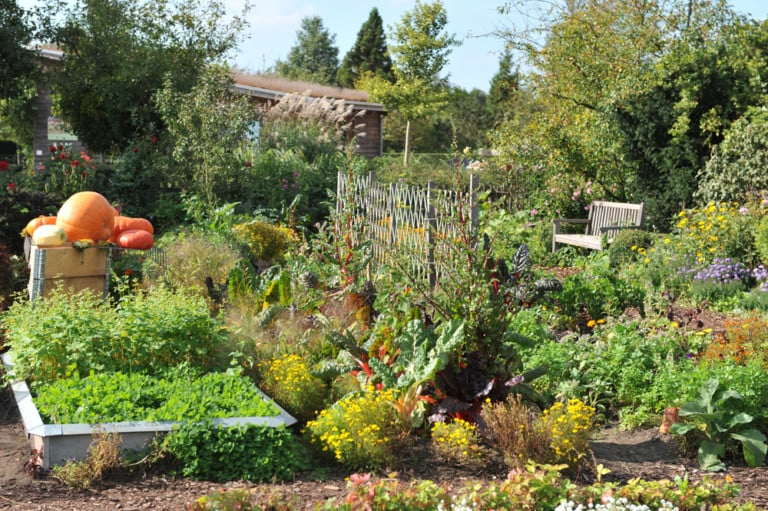
Choosing native plants over invasives can significantly benefit your garden’s health and local ecosystems. By growing plants that are well-adapted to your environment, you not only create a more biodiverse landscape but also support local wildlife. Make informed decisions and help nurture a thriving yard that respects nature’s balance.